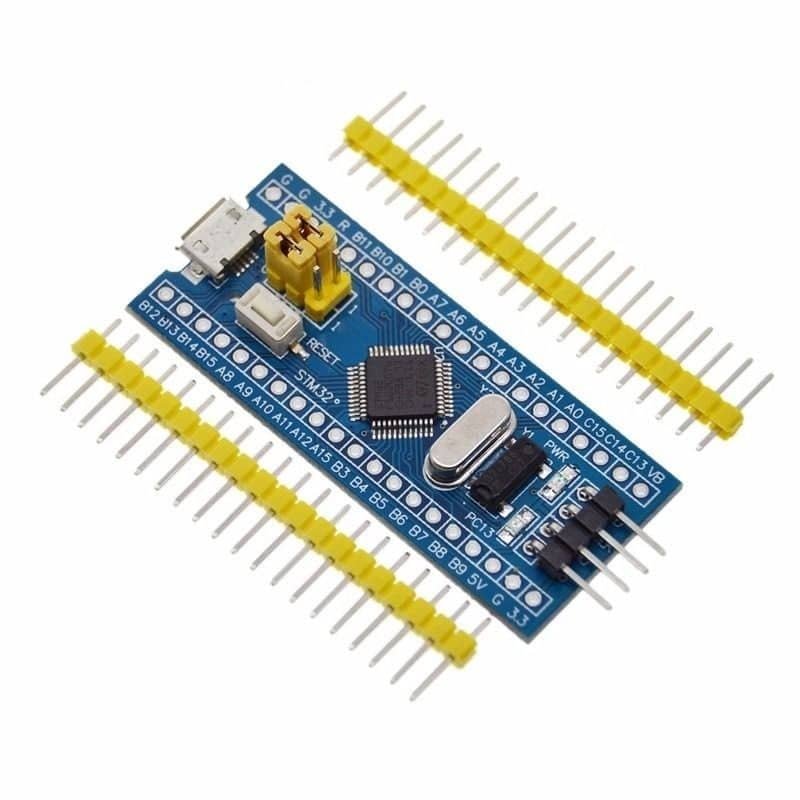

Roll over image to zoom in
ESP32U WiFi BLE Bluetooth Board Type-C (38 Pin) (Pre-Soldered)
$ 3.72
Overview The ESP32U WiFi BLE Bluetooth Board Type-C (38 Pin) is a compact, high-performance development board built around the ESP32 microcontroller. It integrates 2.4 GHz Wi-Fi and Bluetooth Low Energy to support wireless IoT, smart home, and automation projects. With a USB Type-C connector and pre-soldered header pins, the board is ready for rapid prototyping and educational use. Key Features Dual connectivity: Wi-Fi (802.11 b/g/n) and Bluetooth Low Energy (BLE) for flexible wireless communication USB Type-C interface for reliable power delivery and easy programming 38 GPIO pins provide broad interfacing options for sensors, actuators, displays, and modules Pre-soldered headers for plug-and-play compatibility with breadboards and jumper wires High-performance dual-core ESP32 processor for multitasking and real-time control Wide software support including Arduino IDE, ESP-IDF, and MicroPython Technical Specifications Microcontroller: ESP32 dual-core Wireless: Wi-Fi 2.4 GHz (802.11 b/g/n) and Bluetooth Low Energy (BLE) USB Interface: USB Type-C (power and programming) GPIO: 38 pins Operating voltage: 3.3 V (logic) Input power: 5 V via USB Maximum clock speed: up to 240 MHz Flash memory: typically 4 MB Programming support: Arduino IDE, ESP-IDF, MicroPython Compatible Software and Tools Arduino IDE: easy entry for beginners with many community libraries ESP-IDF: Espressif official framework for advanced applications and optimization MicroPython: lightweight Python runtime for quick scripting and education Serial monitor and common USB-C flashing tools supported on Windows, macOS, and Linux Applications IoT and smart home devices (sensors, switches, gateways) Wireless sensor networks and data loggers Home automation and remote monitoring systems Robotics, motor control, and automation projects Educational platforms and prototyping in classrooms and labs Advantages Ready-to-use board with pre-soldered headers speeds up prototyping Reliable, fast wireless connectivity with both Wi-Fi and BLE Compact design with extensive I/O for versatile hardware projects Large community and abundant libraries make development faster Safety and Handling Power the board using a regulated 5 V USB supply via the Type-C port Do not apply voltages above 3.3 V to GPIO pins to avoid damage Observe electrostatic discharge (ESD) precautions when handling the board Getting Started Connect the board to your computer using a USB Type-C cable and a regulated 5 V port. Install the required drivers if prompted by your operating system. Select the ESP32 board in Arduino IDE or set up ESP-IDF/MicroPython toolchain. Upload a sample sketch or MicroPython script to test Wi-Fi and GPIO functionality. Frequently Asked Questions Can I power external sensors from the board? For low-current sensors, power from the 3.3 V output is possible. Check the sensor current requirements and avoid drawing excessive current from the board regulator. Which development environments are supported? Arduino IDE, ESP-IDF, and MicroPython are all supported, allowing flexibility from beginner to advanced development workflows. Note: Images are for illustration only. Actual board layout, markings, and components may vary slightly. Category: Boards and Programmers College Road Electronics 4.81 (575 Reviews)